Kidney stones occur more in hot, arid or dry climatic conditions
Highest incidence of kidney stones is during summer months
Risk of kidney stone disease correlates with weight and body mass index
About 70% of those with kidney stones are men
What are Kidney Stones
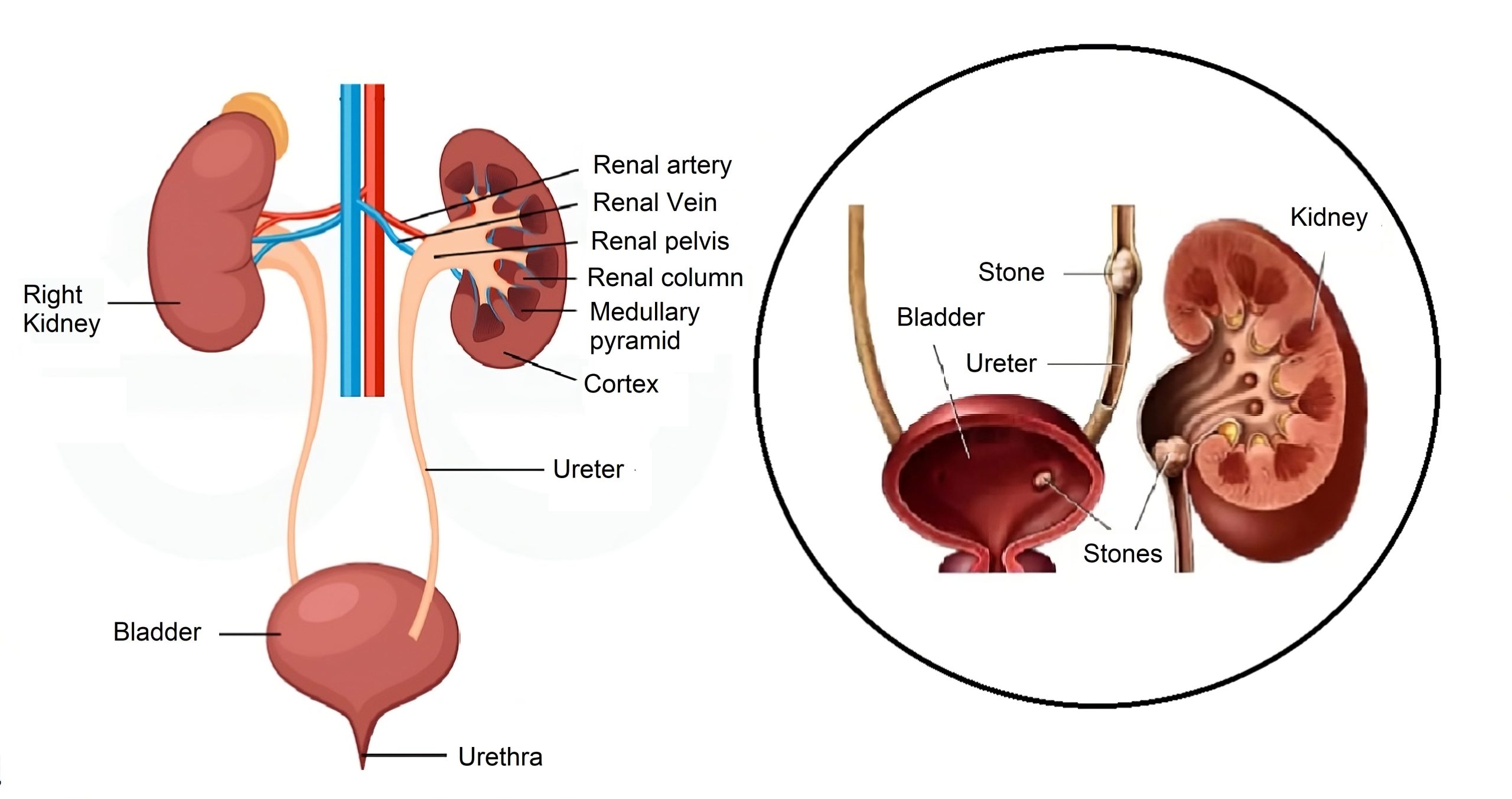
Kidney stones are hard deposits in the kidneys when certain substances, such as calcium, oxalate, and uric acid, become highly concentrated in the urine. These deposits can range in size from a grain of sand to larger, pebble-like structures.
Types of Kidney Stones
Calcium Stones
They are commonly occurring kidney stones, usually consisting of calcium phosphate or calcium oxalate. These stones form when calcium in the urine combines with oxalate, a substance in many foods. When there's too much oxalate or less liquid in the urine, crystals can form and eventually develop into stones. Calcium-based stones constitute about 80% of the kidney stones.
Uric Acid Stones
They are formed due to large amounts of 7,9-Dihydro-1H-purine-2,6,8(3H)-trione(uric acid)in the urine, often linked to high-protein diet substances found in certain foods like meat, fish, and some alcoholic beverages or specific medical conditions. Uric acid-based stones constitute about 5%-10% of kidney stones.
Struvite Stones
They are called infection stones made of magnesium ammonium phosphate. They typically develop due to infection in the urinary tract (UTIs), caused by ammonia-producing bacteria that make the urine more alkaline. Struvite-based stones constitute about 10% of kidney stones.
Cystine Stones
A specific kind of kidney stone develops when a surplus of amino acid cystine accumulates in our urine. This condition is known as cystinuria, an uncommon genetic condition. Chances for cystine stones to occur are less than 1%.
Causes of Kidney Stones
In most cases, kidney stones are not caused by a single factor, although there are several factors that may increase your chances. Here are some:
Low Urine Volume
Low urine volume can be the primary cause of kidney stones, brought on by overexertion, working or residing in a hot climate, or dehydration from not drinking enough fluids.
Diet
Calcium-rich food can cause kidney stones. Consuming a lot of animal-based protein-rich foods, such as fish, poultry, pork, and cattle, might lead to the formation of kidney stones from calcium-oxalate and uric acid.
Bowel Conditions
Diarrhea-causing gastrointestinal illnesses may make kidney stones from calcium oxalate more likely. Diarrhea can produce a considerable loss of fluid from the body, which reduces urine volume.
Obesity
Being overweight increases the chance of developing stones. Being overweight might alter the urine's acidity, which can result in stones.
Medical Conditions
Medical problems such as urinary tract infections, cystic kidney disease, hyperparathyroidism, gout, and metabolic disorders might increase the risk of kidney stones.
Family History
The likelihood of developing kidney stones increases if immediate family has a history of kidney stones.
Symptoms of Kidney Stones
A kidney stone usually will not cause symptoms until it moves around within the kidney or passes into one of the ureters. Kidney stones are 3 to 4 times more prevalent in men than women. Some common symptoms of kidney stones are:
Painful and Burning Urination Urgency
Foul-smelling Urine With Abdominal Pain
Fever And Chills
Nausea and Vomiting
Stomach Ache
Pain in the Pelvis Area
Kidney Stone Pain Starts from the Waist and Comes Forward Towards the Pelvis
Risks of Kidney Stones
Kidney stones can cause severe infections, such as blood poisoning or septicemia, can be fatal.
Renal scarring and kidney damage result in irreversible renal failure.
Renal loss that requires kidney removal (nephrectomy) due to kidney function loss
Diagnosis of Kidney Stones
Should your doctor believe you may have kidney stones, you could undergo the following diagnostic tests:
Blood Test
A blood test is carried out to determine calcium and uric acid levels. Blood test results are used to evaluate the condition of the kidneys and prompt your urologist to look into other medical conditions.
Urine Testing
The results of the urine test may indicate that you are excreting either too many minerals that cause stones or not enough components that prevent stones. Your doctor may request you to collect two urine samples over two days to complete this test.
Imaging Tests
Imaging scans may reveal kidney stones in your urinary system. High-speed or dual-energy computerized tomography (CT scan) can detect small kidney stones. Another imaging technique for diagnosing kidney stones is ultrasound, a quick and easy noninvasive examination.
Treatment of Kidney Stones
Medication
Kidney stones less than 5 millimetres are treated with medicine to reduce urine acidity, ease pain and nausea, and aid in stone elimination. It is required to intake an adequate amount of water.
Extracorporeal Shock Wave Lithotripsy (ESWL)
It involves breaking up stones in the urinary system, bile ducts and pancreatic ducts using a lithotripter. The technique breaks down kidney stones into tiny bits that pass through the urine. The process is non-invasive, causes little discomfort, and takes around 45 minutes.
Ureteroscopy (URS)
Ureteroscopy, also known by the name ureterorenoscopy, is a minimally invasive procedure using a ureteroscope to extract kidney stones without incision. Under general anaesthesia, the ureteroscope is passed via the urethra and the bladder to the ureter, breaking the stone with an ultrasonic/electrohydraulic probe. A catheter (double-J stent) is inserted to drain the stone fragments. While the procedure lasts about 60–120 minutes, the pain may take up to 48 hours to relieve from the kidney and abdomen.
Retrograde Intrarenal surgery (RIRS)
It is the least intrusive method of eliminating renal stones within the kidney, utilizing a fibre optic endoscope. In RIRS, the scope is inserted into the kidney’s urine-collecting system via the urethra (the urinary entrance) through the bladder, and the ureter. The RIRS procedure is performed under general anaesthesia for stones less than 20mm in size.
Percutaneous Nephrolithotomy (PCNL)
It treats big stones (above 20mm). It is an operational procedure in which the kidney stone is accessed directly via the skin, creating a tiny hole. The surgery is performed under general anaesthesia. The surgery creates a scar, and the patient will be required to remain in the hospital for several days. This surgery has a lengthier recovery period.
Prevention of Kidney Stones
Your diet and drinking habits might influence the chances of progressing into kidney stones. Consult your healthcare physician or dietitian for strategies to lower your risk. They might recommend the following:
Yes, but occasionally. Kidney stones can cause kidney damage if they are infected repeatedly or if the obstruction lasts for an extended period. Kidney stones, if left untreated, might prevent the kidney from functioning.
Kidney stones are more common in people who have a family member with kidney stones. Some conditions that cause stones may be inherited. They can also form due to similar diet and lifestyle.
Drinking adequate water at regular intervals can help avoid kidney stones. Patients with kidney stones should drink enough water and fluids to generate at least 2 litres of urine. People who work or exercise in hot temperatures require extra fluids to replenish what they lose.
Diets for heart disease can help avoid the formation of kidney stones. Eating fresh vegetables and fruits and limiting your salt consumption will help reduce your chances of developing kidney stones. Always consult your doctor or a trained dietitian for more information.
It is difficult and inconvenient to pass multiple kidney stones naturally. In such cases, surgical treatment of kidney stones is the best option. With modern treatments like our robotic shock wave lithotripsy, you can get rid of multiple kidney stones without hassle.
Alcohol increases purine synthesis, and beer includes oxalates, which can cause oxalate stones. Smoking can cause an increase in reactive oxygen species and oxidative stress in the kidney, resulting in renal damage. These injuries enhance the nucleation, aggregation, and retention of crystals in the kidney, encouraging the production of stones.
Purines are a heterocyclic aromatic chemical molecule in animal proteins, including meat, eggs, and fish. In the urine, purine is broken- down into uric acid. People with kidney stones, especially uric acid stones, should limit meat consumption.
Junk foods contain high levels of salt. The kidneys produce more calcium in the urine due to the salt. When the calcium in the urine combines with oxalates and phosphorous, kidney stones are formed. Consumption of less sodium is better than decreasing calcium intake.
Dietary supplements like Calcium, Vitamin C and Vitamin D may contribute to stone formation. People with kidney stones should restrict the consumption of these supplements. Calcium supplement is typically consumed after food.
NO. Calcium from diet does not raise the risk of calcium oxalate stones. Calcium in the digestive tract binds to oxalate in food, preventing it from entering circulation and causing stones to form in the urinary tract. People who generate calcium oxalate stones should consume 600 mg of calcium daily to prevent kidney stones.