- wecare@urosonic.com
- +91-8050686989
- Mon - Sat 10:00 to 19:00
- Privacy Policy
- Disclaimer
Extracorporeal Shock Wave Lithotripsy (ESWL)
What we do at Urosonic?
At Urosonic, we carry out non-surgical extracorporeal shock wave lithotripsy (ESWL) procedures to eliminate kidney, pancreatic, and gallbladder stones. Urosonic is equipped with the latest extracorporeal shock wave lithotripsy machine from Dornier MedTech, the world’s first MDR-certified integrated urology company headquartered in Munich, Germany.
Our equipments are cutting-edge in digital urology, with a variable patient table and movable treatment head for precise stone targeting and excellent imaging. Our machines use real EMSE technology, the international standard for shock wave quality.

Why choose ESWL at Urosonic?
- It is a non-invasive procedure, which means no cuts or stitches.
- Adults do not require anesthesia.
- Patients do not experience any pain or bleeding during the procedure
- The risk of complications is low.
- Recovery time is low. Patients can get back to their routine on the same day.
- The procedure lasts about 45 minutes, and the patients can go back home immediately after the procedure.
About ESWL
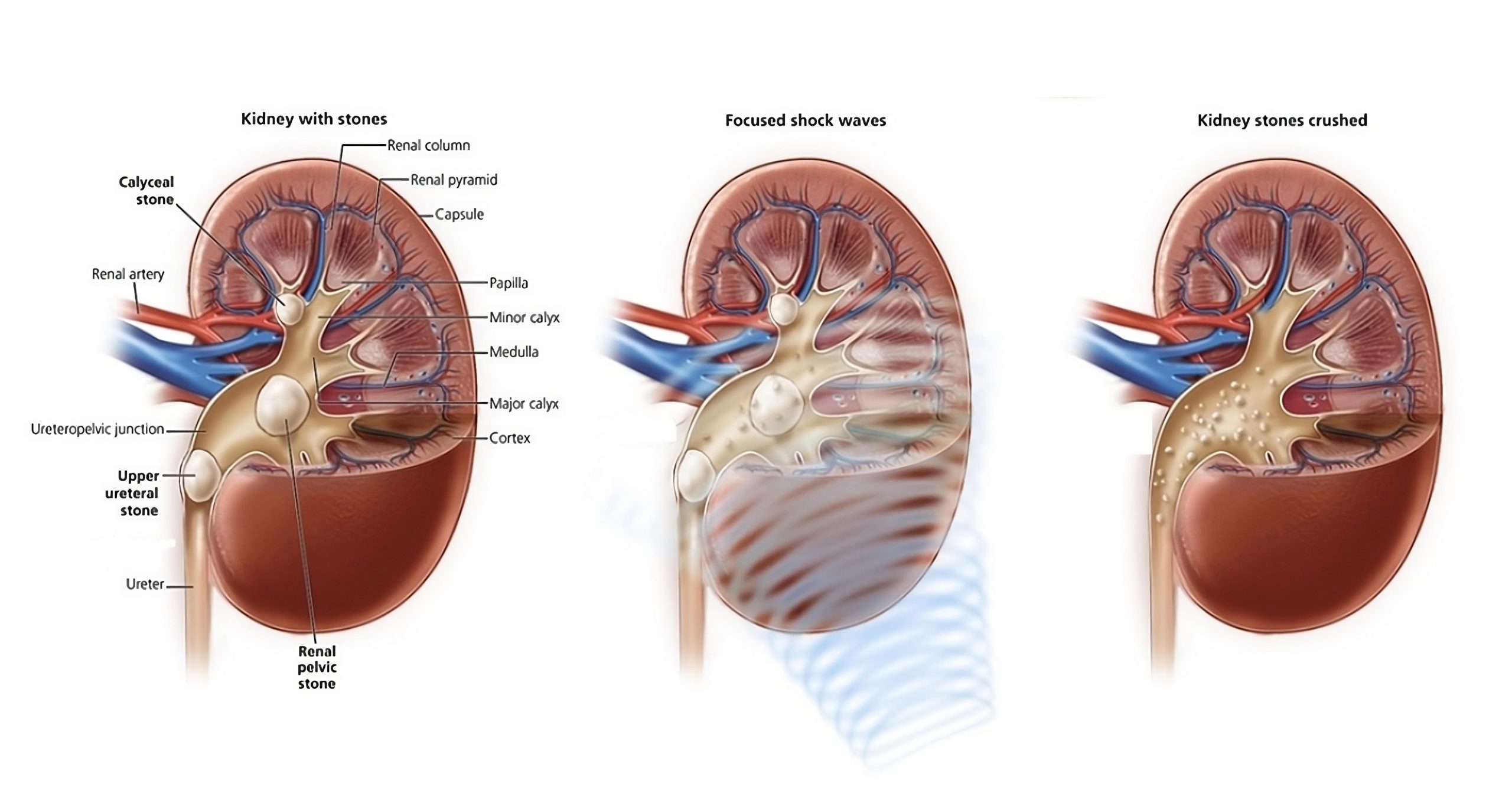
Extracorporeal Shock Wave Lithotripsy (ESWL) is a non-invasive medical procedure to break down kidney stones into smaller fragments, allowing them to pass easily through the urinary tract. This treatment is particularly effective for smaller stones located in the kidney or upper ureter.
How It Works: During ESWL, the patient lies on a treatment table while a machine, the Lithotripter, delivers shock waves to the kidney stone. These shock waves are focused precisely on the stone using imaging techniques such as X-rays or ultrasound. The shock waves pass harmlessly through the body’s soft tissues but cause the kidney stone to break apart into smaller pieces. These smaller stone fragments can then be passed out of the body through urine over the following days or weeks.

ESWL Procedure
Pre-procedure care
Medical Evaluation
- A healthcare expert will do a complete evaluation to determine the size, location, and composition of kidney stones.
- Review medical history, including any past treatments or procedures.
Imaging Studies
Ultrasound or CT scans can be used to confirm the existence and features of stones.
Medication Review
Discuss any medicines you're currently taking. Some medications, particularly blood thinners, may need to be momentarily halted.
Hydration
Patients are often urged to consume plenty of fluids before the surgery to ensure proper hydration.
Fasting
You may need to fast for 6-8 hours before to the surgery.
Pre-procedure Instructions
Please dress loosely and comfortably and bring ID, insurance, and any relevant documents.
Consent
Typically, a consent statement detailing the procedure's risks and benefits must be signed.
Procedure
1. Preparation
To precisely identify the kidney stones, the patient may have imaging procedures like X-rays or ultrasounds. The patient is usually not expected to eat or drink before the procedure.
2. Positioning
The patient lies in a prone or supine position on the table and is positioned in line with the shock wave generator, depending on the location of the kidney stone.
3. Shock Wave Generation
Shock waves are created outside the body and directed precisely at the kidney stone. High-energy pulses of the shock waves travel through the skin and soft tissues to the kidney stones without causing damage.
4. Targeting the Kidney Stone
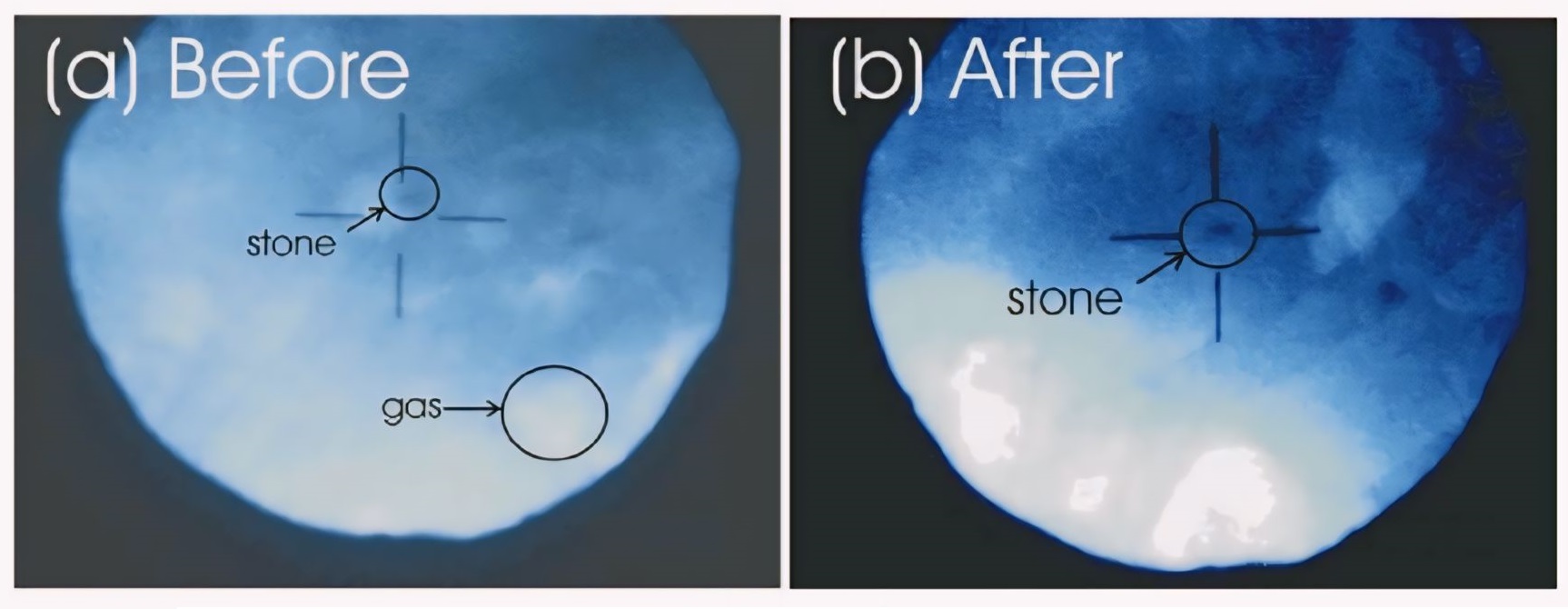
When the shock waves encounter the stones, they create a series of pressure waves that cause the stones to fragment into smaller pieces.
5. Stone Fragmentation
The shock waves break down the kidney stone into smaller fragments, reducing it into sand-like particles or gravel. These smaller fragments can then be passed out of the body through the urinary tract over a few days or weeks.
6. Monitoring and Adjustments
The medical team monitors the progress of stone fragmentation using imaging techniques during the procedure. They may adjust the intensity and focus of the shock waves as needed to optimize the treatment outcomes.
7. Post-Procedure Care
Post the procedure; the patient may experience some discomfort or mild side effects such as bruising or blood in the urine. Pain medication and plenty of fluids are typically recommended to help manage symptoms and facilitate the passage of stone fragments.
8. Follow-Up Evaluation
Patients will usually undergo follow-up imaging tests to assess the success of the ESWL treatment and ensure that all stone fragments have been effectively eliminated from the urinary tract.
Post-Procedure Care
Hydration
Drink plenty of water and fluids to make the stone fragments move.
Healthy Diet
Following a healthy, balanced diet is extremely important. Please ask your urologist or your dietician for further advice.
Collection of stone samples
If possible, please collect the stones and give them to us so we can tell you the exact cause of the stone formation and help you with your dietary plans.
Medications
Your urologist might prescribe certain medications to help you with the stone-releasing process.
Benefits of ESWL over other procedures
| ESWL | Other Procedures | |
|---|---|---|
| Cuts & Scars | Maybe | |
| Anesthesia | No (Adults) | |
| Blood Loss | ||
| Infection | ||
| Recovery Period | Sameday | Upto a Week |
| Hospitalization | ||
| Technology | Very Advanced | Primitive to Advance |
| Procedure | Almost Painless | Painful |
Risk of Extracorporeal Shock Wave Lithotripsy (ESWL)
Extracorporeal Shock Wave Lithotripsy (ESWL) is a generally safe and non-invasive procedure, but like any other medical surgical procedure, there are some potential risks and challenges.
Common issues associated with ESWL are:
- Bruising or soreness: You might have bruising or pain on your back or abdomen where the shock waves were given.
- Hematuria: It is normal to pass blood in the urine after the surgery.
- Incomplete stone fragmentation: The stones may not always break completely, requiring additional treatments.
- Blockage in the ureter: Small stone particles may sometimes block the ureter, generating pain and requiring further surgeries.
- Infection: There is a chance of infection if the stone fragments create blockages.
- Damage to surrounding tissues: In rare situations, shock waves may damage adjoining organs or tissues.
- Pancreatitis: Under some circumstances, there is a very slight chance of pancreatic inflammation.
Frequently Asked Question’s
When can ESWL be used?
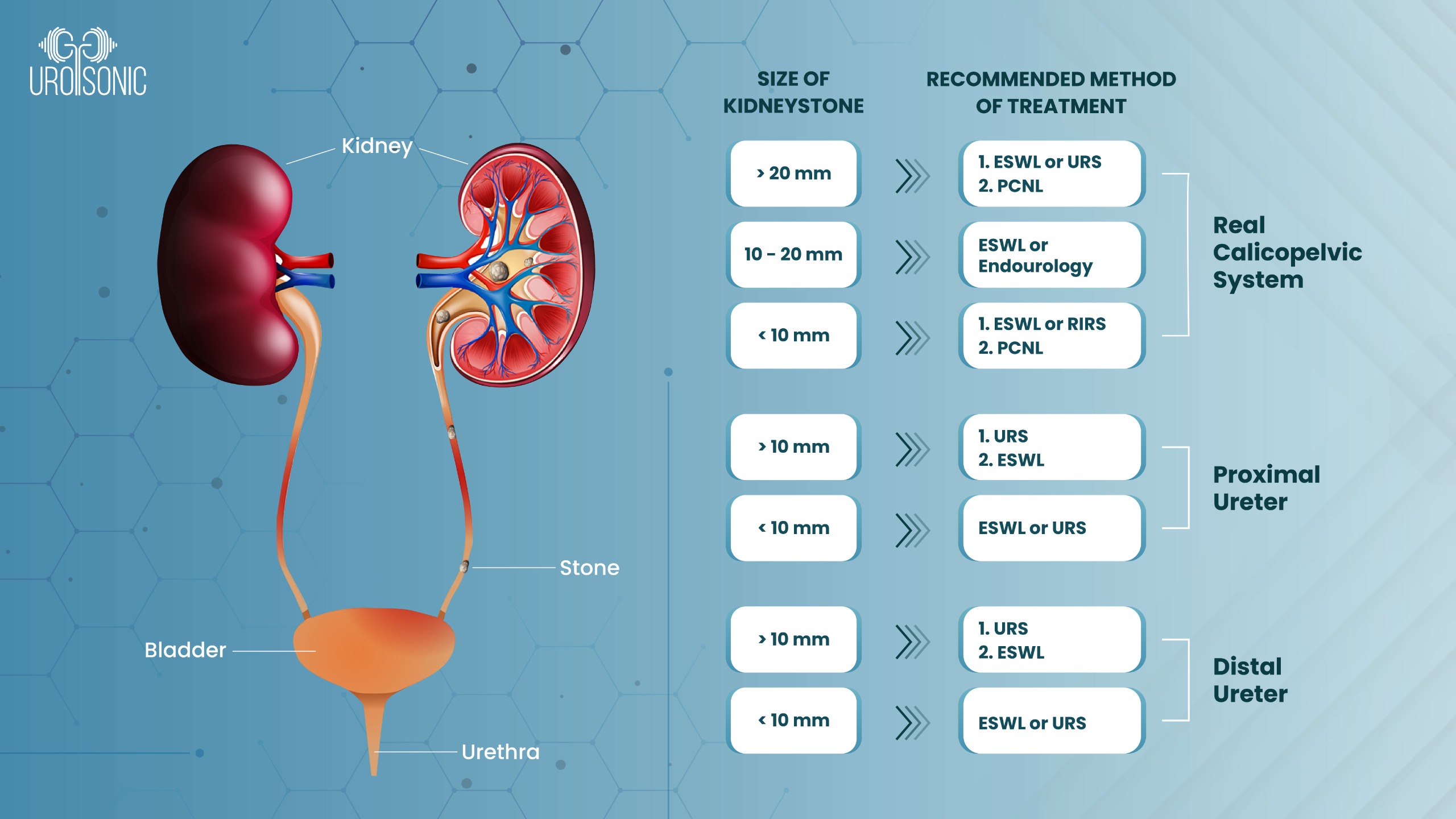
ESWL can be used to break stones up to 20mm. Stone larger than 20mm can be fragmented depending on the type of stone, the location of the stone, the technology of the machine as well as the skill of the Urologist.
How successful is ESWL?
Is hospitalisation required for ESWL?
Can ESWL be performed on Children?
YES, children can undergo ESWL procedure, under general anesthesia.
Can kidney stones reoccur?
Yes, kidney stones can reoccur. It depends on diet, lifestyle and your family history of kidney stones.
How long does it take for the kidney stones to flush out after the procedure?
What do I do if I have passed stones in urine?
Can all stones be treated using ESWL?
ESWL can treat stones less than 20 mm in the Kidneys, Upper Ureter and Terminal Ureter (VUJ).
Is ESWL treatment painful? Does it require anesthesia?
ESWL procedure is not painful as it does not require anesthesia in adults. Few patients may experience some discomfort or mild pain during the procedure. However, in children, the procedure is done under general anesthesia.